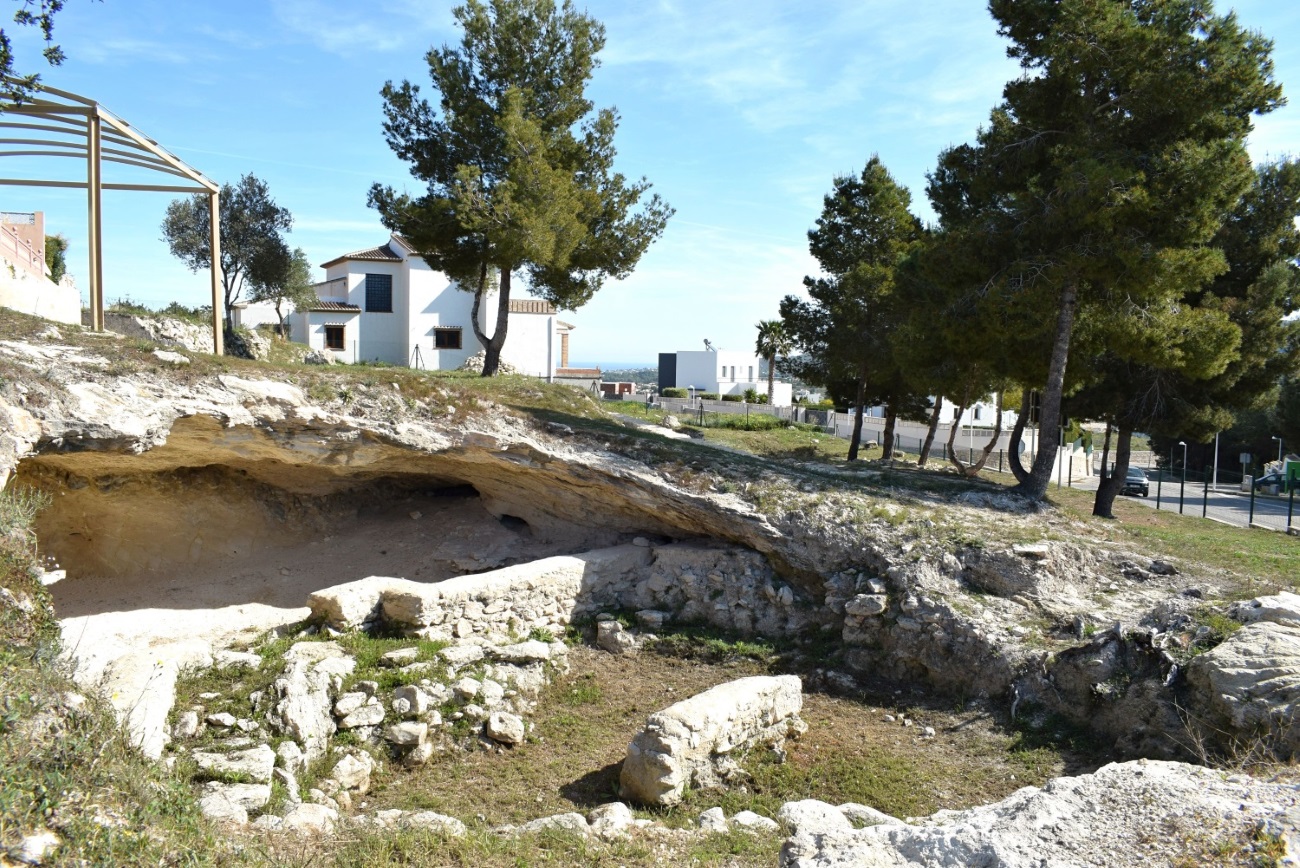
The Cova de les Bruixes is one of the most important archaeological sites in El Poble Nou de Benitatxell. Located in the l’Abiar area, it preserves evidence spanning more than two thousand years of the municipality’s history, from the Iberian and Roman periods to the Andalusi era and the first Christian settlers.
More than two thousand years of history
The archaeological site centres around a small natural rock shelter that served different purposes over time. Archaeological evidence indicates that it was used as an animal enclosure, a storage area and also as a place where domestic waste was deposited.
These deposits have proved particularly valuable to archaeologists, as the materials recovered from them help identify and understand the different phases of occupation at the site.
From the Iberians to the Roman period
Finds dating from the Iberian period include fragments of painted pottery, while the Roman period is represented by examples of terra sigillata and other imported ceramics, some originating from the Italian region of Campania.
The remains recovered indicate occupation over several centuries and help reconstruct the trade connections and ways of life of the people who inhabited this territory in Antiquity.
The Andalusi settlement of Alabiar
One of the best-represented periods is the Andalusi era. Beneath old agricultural terraces, archaeologists discovered structures associated with a rural settlement known as Alabiar, documented in written sources in 1277.
Excavations have identified areas associated with farming activities as well as several storage silos dug into the ground, mainly used to preserve grain and other foodstuffs.
These silos allowed grain to be stored for long periods thanks to the relatively stable temperature and humidity conditions underground. Once abandoned, some were reused as refuse pits, enabling archaeologists to recover numerous pottery fragments and other materials of considerable archaeological value.
Between archaeology and legend
The Cova de les Bruixes is also part of Benitatxell’s popular memory and folklore. Oral tradition associated this place with stories of witches, bandits and smugglers.
According to local tradition, fires that could once be seen from the village fuelled tales of supposed witches’ gatherings for generations and eventually gave the site the name by which it is known today: Cova de les Bruixes, the “Cave of the Witches”.
A heritage site still revealing its history
Known to archaeologists since the 1980s, the site has been the subject of several excavation, research, restoration and conservation campaigns.
In 2026, the Town Council began a new project to protect the surviving archaeological structures and improve interpretation of the site through a signposted route and educational resources, further enhancing its value as a cultural heritage site.
The Cova de les Bruixes provides an exceptional record of the historical evolution of El Poble Nou de Benitatxell. Iberians, Romans, the Andalusi population and later communities all left traces here that help us understand how this territory was inhabited, cultivated and transformed over more than two thousand years.