

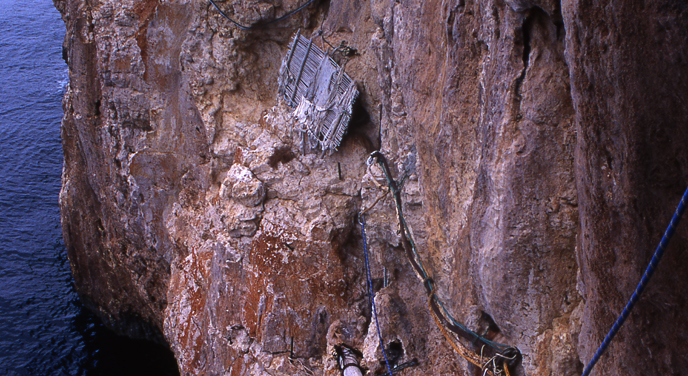
The coastline of El Poble Nou de Benitatxell is characterised by its towering sea cliffs. The rugged nature of the coast made fishing particularly difficult in this area, so traditional fishing —now no longer practised— centred on the pesqueres de cingle: small, handcrafted fishing platforms suspended from the steep cliffs.
The fishermen who used the pesqueres were mostly farmers with limited financial resources who were forced to seek additional sustenance from the sea outside the agricultural season. Their knowledge was based on traditions passed down from father to son and on experience acquired over the years.
Today, several pesqueres can still be seen from the sea or from the cliffs. All of them are in an advanced state of deterioration due to the effects of the sea, but they still provide a striking reminder of the dangers involved and the courage of those who, driven by necessity, ventured down the cliffs to fish. This unique local fishing practice was found exclusively along the cliffs known as the Penya-segats de la Marina.
The pesquera was located near the base of the cliff and was accessed using a system of ropes and ladders that allowed fishermen to descend the rock face to the fishing spot. Fishing took place at night, using light to attract the fish. The pesquera could be set up on a natural rocky ledge or, more commonly, on a platform made of reeds (canyís), secured to the cliff by four rope supports. Fishermen also often created small shelters nearby.
The fishermen themselves were responsible for setting up or “rigging” the pesquera. They installed the ropes, ladders and other securing elements and prepared the fishing spot to create the minimum space needed to work.
Two main types of pesqueres can therefore be distinguished: those located on rocky ledges and those built on reed platforms. The inhabitants of El Poble Nou de Benitatxell almost exclusively used the latter, which were set up in the late 19th and early 20th centuries.
This type of fishing is also known as encesa, as light was used to attract the fish. Terms such as encesa, candil, hacha de viento, candelero and carburero refer to different ways in which artificial light was used for fishing. Initially, light was produced by burning materials gathered from the surrounding natural environment and, later, through chemical combustion in specially designed containers.
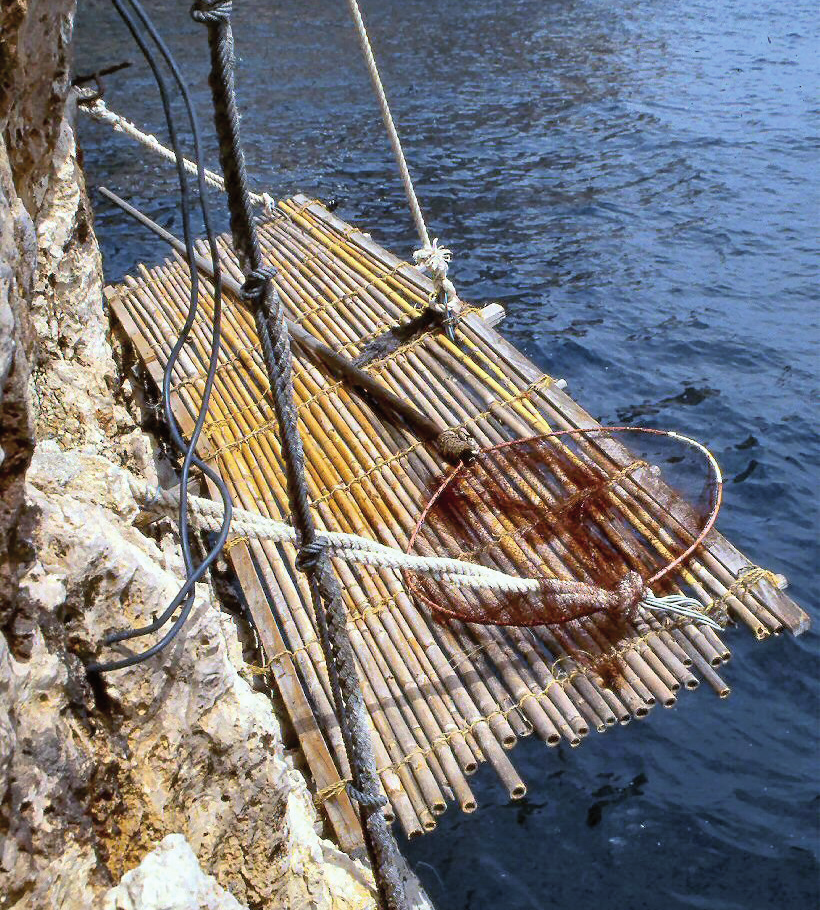
Fishermen usually walked to the pesquera from the village, a journey that took approximately an hour and a half. They had to leave early enough to make use of the remaining daylight before nightfall. Once there, they descended to the shelter and, before eating their evening meal, prepared everything needed for fishing: they secured the reed platform, positioned the light and prepared their fishing rods and other equipment.
Fishing began after nightfall and, according to historical accounts, the largest catches were made shortly after sunset, between 7 and 10 p.m., and before dawn, between 5 and 7 a.m. Before sunrise, the fishermen began putting away their equipment, removing the reed platform and securing it to the rock before making their way home with their catch.
On their way back, the enceseros would wait for one another at points where paths crossed, known as fumadors(“smoking places”), so called because it was common for them to smoke a cigarette while waiting for their companions. Waiting for one another was also a way of detecting possible accidents if someone failed to return or took longer than expected. Once back in the village, they sold their catch in Calle Mayor.
The enceseros of El Poble Nou de Benitatxell stopped selling their catch in Calle Mayor between 1955 and 1960 and consequently stopped regularly fishing from the pesqueres. By around the 1970s, going to the pesqueres had become more a matter of tradition and personal interest than necessity. The practice gradually declined for several reasons, including the emergence of new economic activities associated with industrial and urban development, the ageing of the generation that had spent much of their lives fishing from the pesqueres, and declining catches due to the overexploitation of marine resources.
Fishing from the pesqueres was extremely demanding and dangerous, and it cost the lives of several residents of El Poble Nou de Benitatxell. Today, knowledge of this traditional practice survives through historical documentation and the oral accounts of the village’s older generations.