

ES
EN
VA
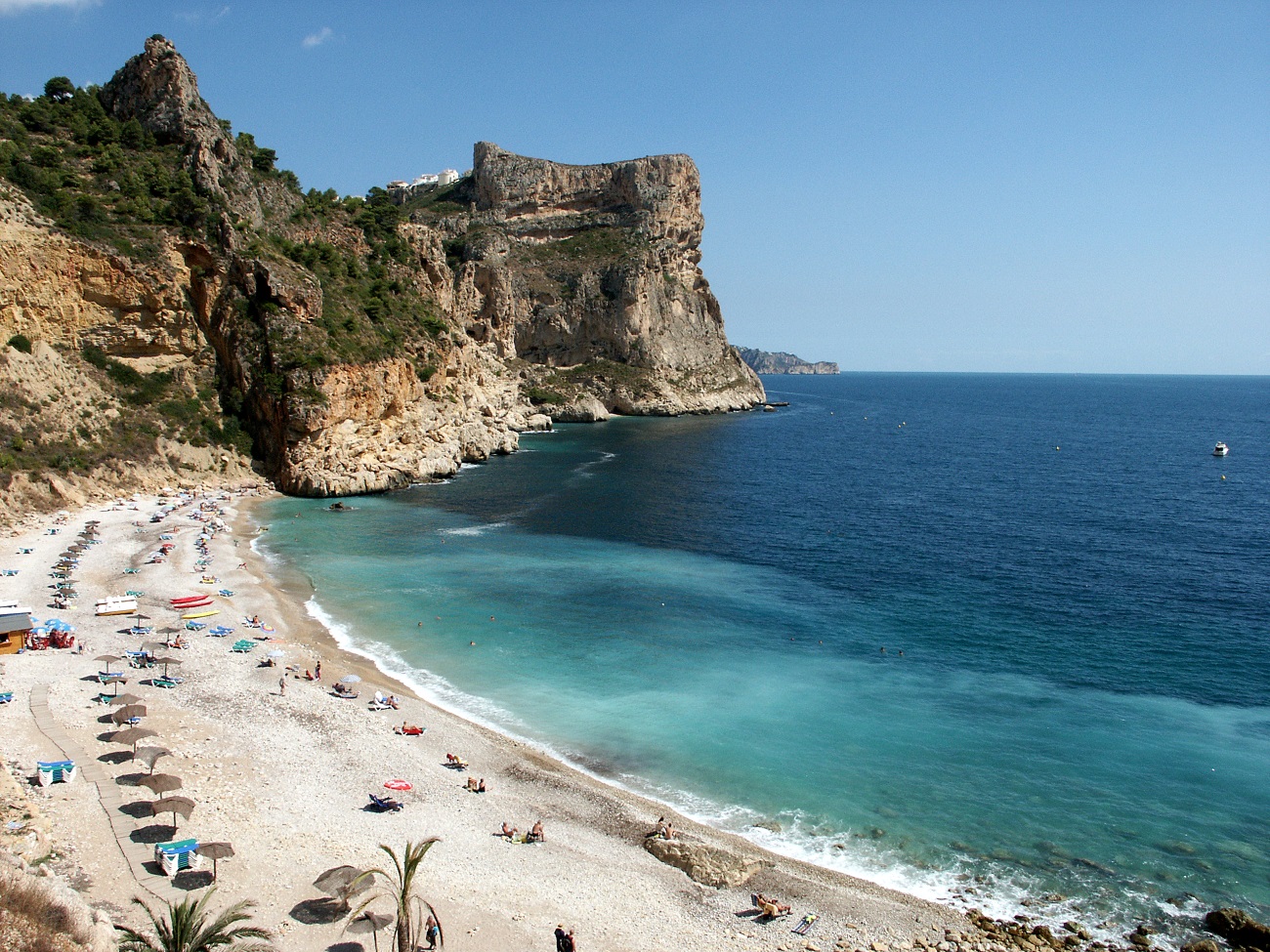
Cala del Moraig is one of the most iconic natural sites in El Poble Nou de Benitatxell. Surrounded by imposing cliffs and crystal-clear waters, this pebble cove stands out for its spectacular scenery and for remarkable geological and natural features such as the Cova dels Arcs and the Moraig Fault.
Cala del Moraig is the main cove of El Poble Nou de Benitatxell and one of the great natural icons of the Marina Alta. Hidden behind the Puig Llorença massif and surrounded by imposing cliffs, it brings together clear waters, a spectacular Mediterranean landscape and exceptional geological heritage.
The cove consists mainly of gravel and pebbles and opens onto the Mediterranean at the foot of towering limestone walls. The clarity of its waters and the richness of its seabed make it one of the municipality’s main bathing areas and a particularly attractive location for snorkelling and scuba diving.
Much of Moraig’s unique character lies in the geological formations surrounding the beach.
At one end is the Cova dels Arcs, a spectacular natural cavity whose great arches opening onto the Mediterranean form one of the most recognisable images of the Benitatxell coastline.
The cave originated as part of an ancient karst system that initially developed above water. A subsequent rise in sea level flooded the cavity and, since then, wave action and the dissolution of the limestone have continued to shape its forms.
Nearby is the Moraig Fault, an impressive geological fracture formed approximately 11 million years ago and designated a Natural Monument in 2022. Its great fault plane provides direct evidence of the tectonic movements that helped shape this landscape.
Beside the Moraig Fault lies the underwater entrance to the Riu del Moraig or Riu Blanc, one of the most remarkable hydrogeological systems on the Mediterranean coast.
It is an active submarine spring connected to the Benissa aquifer, which discharges freshwater into the Mediterranean through an extensive network of completely submerged galleries and passages.
Cave-diving explorations have penetrated several kilometres into this complex underground system, although many passages remain unexplored.
The presence of Riu Blanc, the Moraig Fault and the Cova dels Arcs makes the area around the cove a remarkable natural laboratory for understanding geology and the movement of groundwater.
Cala del Moraig forms part of the Penya-segats de la Marina, a protected area included in the Natura 2000 Networkas both a Special Area of Conservation (SAC) and a Special Protection Area for Birds (SPA).
The great limestone cliffs support plant communities and wildlife adapted to particularly demanding conditions, while the protected area continues beneath the waters of the Mediterranean.
The seabed combines rocky areas, cavities and valuable underwater ecosystems, including Posidonia oceanicaseagrass meadows, which are fundamental to marine biodiversity and water quality.
The usual clarity of the water makes it possible to observe the underwater landscape when sea conditions are suitable.
Rocky seabeds provide shelter for numerous species and make the cove particularly attractive for snorkelling.
Scuba diving offers access to deeper and more complex areas, but the caves and underground systems nearby require specialist training, experience and equipment. Riu Blanc should not be regarded as a conventional recreational diving site.
Cala del Moraig holds the Blue Flag distinction and, during the bathing season, provides a range of services designed to improve visitor safety and assistance.
Part of the cove is equipped to facilitate access and bathing for people with reduced mobility, with support equipment such as an amphibious bathing chair available while the seasonal service is operating.
At one end of the cove there is also an area with a long-standing naturist tradition, which has formed part of the customary use of this space for many years.
For a better understanding of the extraordinary configuration of this section of coastline, the Mirador del Moraigoffers an almost overhead view of the cove.
From above, visitors can appreciate how Moraig lies enclosed between the cliffs of Puig Llorença and how the landscape continues towards Cala dels Testos and Morro Falquí, offering a completely different perspective from the one experienced at sea level.
The Moraig area is also the starting point for some of Benitatxell’s most representative walking routes.
The Ruta dels Penya-segats – Moraig-Llebeig follows the base of the great cliffs to Cala Llebeig, passing traditional shelters once used by fishermen and farmers.
The Moraig Fault Route provides access to some of the area’s most important geological formations and helps visitors understand the origins of this spectacular landscape.
Type: natural cove with gravel and pebbles
Distinction: Blue Flag
Setting: cliffs and protected natural area
Activities: swimming, snorkelling and scuba diving
Naturism: area with a long-standing naturist tradition at one end
Accessibility: facilities for people with reduced mobility and an amphibious bathing chair available during the bathing season
Highlights: Cova dels Arcs, Moraig Fault and Riu Blanc
Seabed: rock and Posidonia oceanica seagrass meadows
Seasonal services: buoyed bathing area, lifeguard and rescue services, medical assistance, information on sea conditions and cleaning
Restrictions: camping and access with domestic animals are not permitted, in accordance with the applicable regulations.
Vehicle access to the cove is not permitted. The parking area is located at the top of the descent, near the beginning of the road leading down to Moraig, from where visitors continue to the beach.
During the busiest months, special access, mobility and transport measures may be introduced. Visitors are therefore advised to check the latest municipal information before their visit.
Cala del Moraig is much more than a place for swimming: it is where the cliffs, the Mediterranean and millions of years of geological history come together in one of the most representative landscapes of El Poble Nou de Benitatxell.
You have 0 favourites in your list.
View the full list in My favourites.

Add your favourite places to your list. You can then manage them and send them to your mobile from My favourites.